
Embracing the AI Evolution: Navigating the Shift from Static to Dynamic Value in the Workforce
Do you have Dynamic or Static Value?

"Ch-ch-ch-ch-changes
Turn and face the strange
Ch-ch-changes
Just gonna have to be a different man
Time may change me
But I can't trace time."
- David Bowie
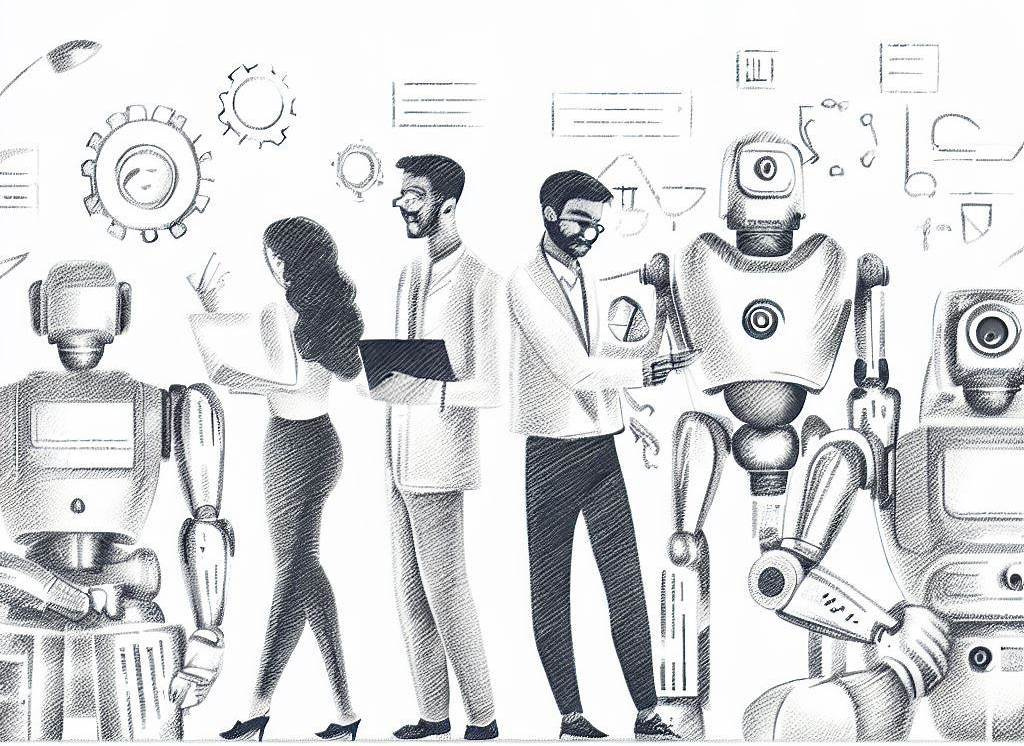
In the recent All-In Podcast (E123 https://www.youtube.com/channel/UCESLZhusAkFfsNsApnjF_Cg ) David Friedberg (https://www.linkedin.com/in/davidfriedberg) spoke about how technology has displaced human labor over history. Bill Gates (https://www.linkedin.com/in/williamhgates/), has envisioned AI that would one day replace many of the repetitive tasks in white-collar jobs. Most recently in interviews like this one with The Australian Financial Review https://www.afr.com/technology/ai-is-coming-for-white-collar-jobs-gates-warns-20230123-p5cev7 specifically referencing Large Language Model impacts that is sweeping the digital business landscape with promises of extreme efficiency and new capabilities emerging.
We are moving at a pace of innovation that is unprecedented in history. However, the phenomenon of technological advancements replacing human labor of all kinds is not new. One could argue this process is a form of evolution. An evolution of value. How each thought worker defined their value in the digital age has always required us to evolve our individual value to our businesses, our customers, and our socioeconomic place in the world.
We can categorize our value into two categories:
Static Value
Static value refers to the consistent and predictable contribution that a worker brings to a business. This is typically related to tasks or responsibilities that do not change significantly over time and can be expected to be accomplished with a certain level of quality and efficiency. Examples of static value could include repetitive tasks, such as data entry or following a standardized procedure.
Dynamic Value
Dynamic value refers to the adaptable and evolving contribution a worker brings to a business. This value is derived from the worker's ability to adapt to new challenges, innovate, and grow their skillset in response to changing business needs or market conditions. Examples of dynamic value could include creative problem-solving, the development of new products or services, or the ability to learn and adapt to new technologies.
Business Benefit
GPT and other advanced AI technologies are projected to have a significant impact on the workforce that provides static value to businesses. Businesses will benefit through these disruptions that we can categorize in two ways:
Automation
Automation of repetitive, rule-based tasks that typically contribute to the static value resulting in increased efficiency and cost savings for businesses.
Augmentation
augmentation and collaboration to enhance productivity. For many tasks, AI technologies like GPT can augment human capabilities, increasing productivity and enabling tasks that were not previously possible. This will allow workers to focus on higher-value tasks and produce greater business value.
Impacting Digital & IT Jobs
Automation has been a significant driving force in the evolution of the IT sector for decades. As technology has advanced, automation has led to increased efficiency, productivity, and cost savings in various IT jobs. The impact of automation on IT jobs can be seen in several key areas:
Job displacement and transformation
Automation has led to the displacement of certain Digital jobs, particularly those involving repetitive, manual, or rule-based tasks. For example, data entry and basic system administration tasks have been automated to a large extent, reducing the need for those roles. However, automation has also transformed many Digital jobs, shifting the focus from manual tasks to more complex problem-solving and strategic roles.
We experienced this phenomenon most recently in the move to cloud-based services like many of the Platform as a Service (PaaS) services where many of the operational aspects of a technology stack required to develop an application are completely automated (DB, Middleware, front-end). This displaced the static value of systems engineers who focused on specific middleware and backend systems, their entire value chain was traded for configuration knowledge. This change forced individuals to push into dynamic value roles or move to organizations that continue to run less optimally and continue to value the static value provided in those roles.
New job creation
Automation has contributed to the creation of new Digital jobs that did not exist in the past. As technology evolves and new tools and platforms are developed, new job roles and specialties have emerged, such as cloud engineers, data scientists, cybersecurity analysts, and machine learning engineers.
The current AI lead disruption we are starting to experience was built on the foundations laid by those who adapted from static value roles of the previous decades and moved in the past decade to new roles like ML and data engineering. And those that adapt their value to be more dynamic will continue to innovate and push us further into an efficient future.
Improved productivity
Automation has allowed Digital professionals to accomplish tasks more efficiently, freeing up time for more strategic work. This increased productivity can lead to a higher value of IT work, as professionals can focus on tasks that require human creativity and decision-making.
The concept of a 10x developer has been thrown around a lot lately and these technologies can make most developers more productive so we can turn out more products and capabilities. We are also seeing a rise in businesses adopting low code platforms to accelerate development and reduce the burden of the shortage of skillsets, like DevOps. However, the emergence of these LLM-backed development-accelerating tools will close the gap and enable organizations to do more with the resources available.
Development and DevOps are just a sampling of roles where productivity is increasing through the use of these tools. From project and product management to design and sales, many roles across the organization are being elevated in value with GPT adoption. We see an opportunity for a few highly motivated, generalists to leverage the power of GPTs to increase their impact on organizations and the wider market by 10x or 20x.
It is no longer about doing more with less it’s about doing more and more people doing more at a higher value.
Shift in skills
As automation takes over routine tasks, Digital professionals must adapt by developing new skills and expertise in emerging technologies. The demand for skills related to AI, machine learning, big data, and cloud computing has grown significantly in recent years. What will need to change now is the pace at which individuals adopt and seek the dynamic value created by these new skills.
Enhanced collaboration
Automation has facilitated better collaboration between Digital professionals and other departments within an organization. Automated tools and platforms have made it easier for non-IT staff to access and use IT resources, leading to more cross-functional collaboration and innovation.
We’ve recently experienced examples of how GPTs are enhancing collaboration between technical teams and Sales, marketing, and management. One such example is when new features that are not well understood have been released, the technical team’s explanation can be summarized and put into business context with a single prompt, clearing the path to Sales enablement.
Conclusion
the rapid advancement of AI technologies, such as GPT, is revolutionizing the way we work and redefining the value we bring to our businesses. As repetitive tasks and static value roles are increasingly automated, the demand for dynamic value roles is on the rise. It is crucial for individuals to adapt and evolve their skills in order to thrive in this next era of technological innovation.
The displacement of certain Digital jobs and the emergence of new roles present both challenges and opportunities. Embracing continuous learning and upskilling in emerging technologies will be vital for staying relevant in the job market. Moreover, the increased productivity and enhanced collaboration enabled by AI technologies like GPT will empower individuals and organizations to achieve more with their existing resources.
Ultimately, the AI-driven transformation of the workforce is an evolutionary process that encourages us to focus on developing dynamic value, fostering innovation, and maximizing our impact in the ever-changing digital landscape. By embracing these changes and adapting our skills, we can position ourselves for continued success in the age of AI.